From Screen to Shop: Bridging Digital Design and Physical Innovation in the STEM Lab
Instructional Design is often mistakenly confined to the glass of a laptop screen or the linear path of a corporate compliance module. However, when we apply rigorous instructional frameworks to a physical STEM lab, we move beyond simple “hands-on activity” and enter the realm of structured, project-based innovation.
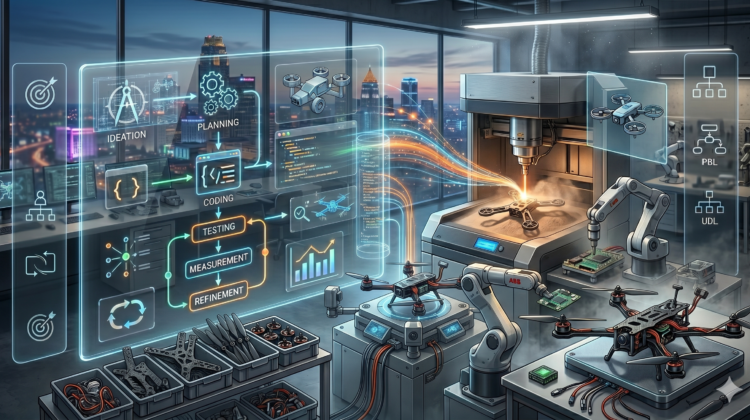
In a high-stakes learning environment, such as a robotics lab or a data-driven workshop, the physical space can quickly devolve into chaos without a digital blueprint. The secret to bridging this gap lies in scaffolding the physical experience with the same precision used in e-learning architecture.
The Blueprint: Backward Design in the Makerspace
The most effective physical learning experiences begin at the end. Using the Backward Design framework, we first focus on the desired results—specific skills such as 3D prototyping, Python logic, or sensor integration—before deciding on the lab activities (Wiggins & McTighe, 2005).
In my work, I have seen that students thrive when the physical “doing” is anchored by clear, digital objectives. For example, in a project like Cell Quest: Organelles Adventure, the digital simulation acts as the cognitive scaffold that prepares the learner for the physical application of those biological concepts. Without this digital-to-physical bridge, the hands-on work often becomes “aimless doing” rather than “purposeful learning.”
Scaffolding through Digital Roadmaps
To manage the complexity of a physical STEM lab, we can use digital tools such as Genially or Articulate 360 to create interactive roadmaps. These digital companions provide just-in-time instruction. When a student hits a friction point while assembling a circuit or troubleshooting a drone, they don’t wait in a queue for the instructor. Instead, they access a microlearning module—a digital “coach”—that provides the specific logic needed to move forward.
This approach aligns with Constructivist Learning Theory, which suggests that learners build their own understanding through experience and reflection (Hmelo-Silver, 2004). The digital roadmap doesn’t answer; it provides the cognitive tools the student needs to find the solution physically.
The Impact of Rigorous Design
Research indicates that when instructional design is applied to project-based learning (PBL), student engagement and retention of complex technical skills significantly increase compared to traditional instruction (Boss & Krauss, 2022). By integrating Universal Design for Learning (UDL) principles, we ensure that the physical lab is accessible to all learners, providing multiple ways to engage with the material and demonstrate mastery.
Whether you are designing a corporate simulation or a middle school engineering challenge, the goal remains the same: to create an ecosystem where the digital and physical worlds inform one another.
Design. Measure. Improve.
References
- Boss, S., & Krauss, J. (2022). Reinventing project-based learning: Your field guide to real-world projects in the digital age (3rd ed.). International Society for Technology in Education.
- Hmelo-Silver, C. E. (2004). Problem-based learning: What and how do students learn? Educational Psychology Review, 16(3), 235–266.
- Wiggins, G., & McTighe, J. (2005). Understanding by design (2nd ed.). Association for Supervision and Curriculum Development.