Data-Driven Constructivism: Architecting Cognitive Alignment in STEM Education
Introduction & Core Philosophy
My personal philosophy of learning design and technology serves as the architectural blueprint for my educational practice, anchored in a framework I call Data-Driven Constructivism. Constructivism posits that learners do not passively absorb information; rather, they actively construct their own understanding of the world through experiential engagement, problem-solving, and reflective practice (Zajda, 2021). In my middle school STEM-CCTE classroom, I have observed firsthand the profound impact of inquiry-based learning. However, unstructured exploration in complex subjects like scientific literacy can easily lead to frustration and cognitive overload. Therefore, true scientific inquiry must be deliberately scaffolded and continuously measured. My approach merges the active, experiential nature of constructivist pedagogy with the precision of learning analytics. In this ecosystem, educational technology is not merely a vehicle for content delivery, but rather the essential medium for discovery and the primary metric for continuous instructional improvement.
Cognitive Load & Universal Design
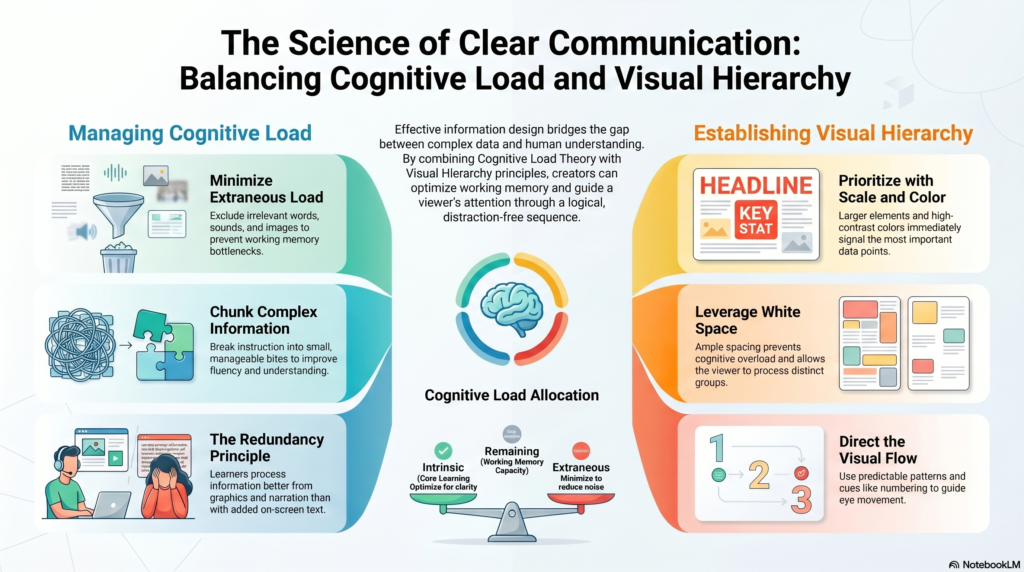
Central to my design philosophy is the rigorous application of Cognitive Load Theory (CLT) to build accessible, equitable, and universally designed learning environments. Developing science literacy requires students to decode dense academic texts, interpret complex quantitative data, and synthesize evidence-based arguments. To prevent these rigorous tasks from overwhelming a learner’s working memory, instructional designers must carefully balance three distinct types of cognitive load: minimizing extraneous load, managing intrinsic load, and optimizing germane load (Clark & Mayer, 2016).
This theoretical foundation drives my practical design choices. For example, in my “Building Science Literacy Skills” course blueprint, I actively apply the Signaling Principle. During the initial modules, I guide learners through interactive text annotations using digital highlighters and high-contrast color coding to chunk complex scientific data. This deliberate structuring reduces extraneous cognitive load. This approach goes far beyond superficial compliance with Universal Design for Learning (UDL) guidelines; it intentionally dismantles barriers to comprehension so that diverse learner populations—including English Language Learners and those with Individualized Education Programs (IEPs)—can engage deeply with the material without facing cognitive exhaustion.
Strategic Technology Integration & Analytics
I view educational technology primarily as an analytical instrument that drives strategic instructional decisions. This perspective heavily influences my tool selection and media integration. For instance, when designing the “Data Detective” formative assessment for my students, I strategically chose to author the module in Articulate Storyline 360 to leverage its advanced SCORM tracking capabilities. Unlike traditional multiple-choice quizzes that yield a single, uninformative final score, this interactive assessment is engineered to pinpoint specific points of cognitive breakdown in a student’s quantitative literacy. The interactive simulations gather granular diagnostic data on highly specific sub-skills, such as whether a learner can accurately plot variables on an X-Y axis, identify an overall trendline, or successfully map a distinct data point to refute a false scientific claim.
To support this robust data ecosystem, the delivery tool must be equally capable. I rely on Learning Management Systems like Canvas Free for Teacher, which offer comprehensive learning mastery gradebooks and actionable learning analytics (Molinillo et al., 2018). These platforms allow me to track student progress at a granular level and utilize conditional release features, dynamically adapting the learning path based on real-time formative assessment data.
Adult Learning Perspectives & Leadership
As my career evolves into broader roles encompassing instructional design leadership and learning analytics, my philosophy has naturally expanded to incorporate adult learning principles. Evaluating instructional efficacy in professional environments demands frameworks specifically tailored to adult contexts. I rely heavily on the TAWOCK (Technology Andragogy Work Content Knowledge) model, which builds upon the foundational TPACK framework by explicitly addressing the self-directed, experiential needs of adult learners in the workplace (Younis, 2024).
When developing professional development modules or institutional compliance training, I apply the Plan-Do-Study-Act (PDSA) cycle—a continuous improvement model designed for testing and refining processes through manageable, iterative loops (Montague et al., 2024). By integrating data visualization software to track backend performance metrics, I can evaluate the real-world results of a training module (Study) and execute necessary modifications before deploying it across the organization (Act). This analytical, iterative approach ensures that adult learning experiences remain highly relevant to authentic workplace demands, respect the autonomy of the professional learner, and consistently drive measurable performance outcomes.
The Effective Learning Environment & Conclusion
Synthesizing my theoretical research and practical laboratory experience, I believe that the most effective learning environments are visually cohesive, interactively rich, and inherently socially constructed. Because learning is fundamentally a social process deeply influenced by language, culture, and collaborative dialogue, technology must be leveraged to foster community rather than digital isolation (Garrison et al., 2010).
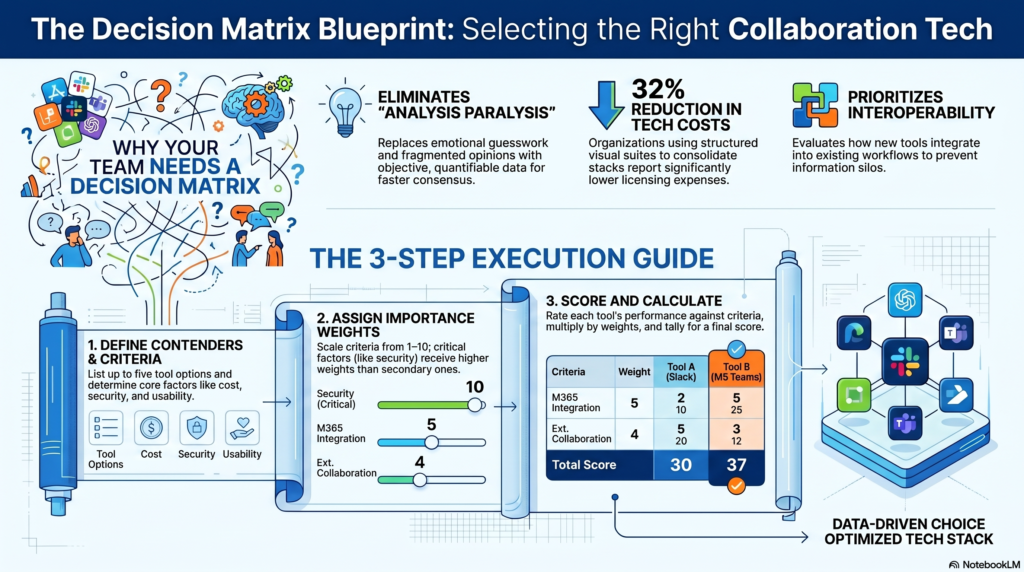
In my instructional designs, I prioritize active community building. For example, in the Collaborative Evidence Mapping Jigsaw activity, I place students in triads on a shared digital whiteboard—such as Padlet or Miro—to collaboratively construct a visual concept map that connects scientific vocabulary, datasets, and written arguments. Moving away from static, text-heavy discussion boards, this visual, multimodal collaboration mimics the dynamic “poster paper and markers” group work that middle schoolers naturally gravitate toward in a physical classroom.
Ultimately, my philosophy of learning design and technology is a steadfast commitment to architecting cognitive alignment. By harmonizing constructivist pedagogy with rigorous learning analytics, adult learning principles, and accessible multimedia design, I strive to create dynamic and inclusive educational spaces. In these environments, technology empowers learners to actively build their own understanding, while simultaneously providing instructional designers with the precise, actionable insights necessary to guide their ongoing educational journey.
References
1. Clark, R. C., & Mayer, R. E. (2016). E-learning and the science of instruction: Proven guidelines for consumers and designers of multimedia learning (4th ed.). John Wiley & Sons.
2. Garrison, D. R., Anderson, T., & Archer, W. (2010). The first decade of the community of inquiry framework: A retrospective. The Internet and Higher Education, 13(1-2), 5-9.
3. Molinillo, S., Aguilar-Illescas, R., Anaya-Sánchez, R., & Vallespín-Arán, M. (2018). Exploring the transformative potential of learning analytics in formative assessment. Journal of Postaxial.
4. Montague, N. R., Brewer, P. C., Reid, L. C., & Kohlmeyer, J. M. (2024). Helping your students overcome cramming using an adapted version of W. Edwards Deming’s Plan-Do-Study-Act (PDSA) cycle. Issues in Accounting Education, 39(3), 83-97.
5. Younis, B. (2024). Developing and validating the contextual technology andragogy/pedagogy entrepreneurship work content knowledge model: A framework for vocational education. IEEE Transactions on Education.
6. Zajda, J. (2021). Constructivist learning theory and creating effective learning environments. In Globalisation and education reforms: Creating effective learning environments (pp. 35-50). Springer International Publishing.